Alumni Stories
Nikki Ramage ’13, completed a Master of Divinity at Azusa Pacific University on full scholarship and serves as an Associate Pastor of Free Methodist Church of Santa Barbara.
Wesley Simmonds ’18, graduated with an M.Div. from Duke Divinity School and is teaching theology at a Christian middle school.
Delaney Balza ’20, has been serving as Director of Junior High and High School Ministry at Oceanhills Church in Santa Barbara.
Julie Leyva ’14, after graduating from Westmont as a religious studies major, earned her Master of Divinity from Duke Divinity School in 2017 and completed her Ph.D. in New Testament at Duke University in 2026. She currently serves as an associate pastor and teaches theology at Trinity School of Durham and Chapel Hill.
Caleb Crother ’22, is pursuing a master’s degree in Marriage, Couples and Family Therapy at George Fox University with the goal of becoming a licensed Marriage and Family Therapist. He also serves as the Director of Youth Ministry at his local church.
Career Opportunities
Business Christian counseling, clinical counseling, spiritual direction Foreign and domestic missions Journalism and the arts Law Marketing and management Medicine | Ministry Music, sacred music, worship leadership Nonprofit organizations, NGOs, Peace Corps Pastoring, youth ministry Publishing Social work, occupational therapy Teaching |
See Career Paths for Graduates Who Studied Religious Studies at Westmont
Faculty and Staff
Westmont Magazine
Three Treats for Young Readers
Sandra Richter, the Gundry professor of biblical studies, has written “Abigail and the Waterfall” about a family hiking through lush, Appalachian landscapes, encountering fascinating animals and marveling at a waterfall. “The book invites families to discuss what the Bible says about caring for the environment, animals and the beautiful world around us,” she says.
CATLab Blog
A Reflection of God: Technology and Imago Dei
In this blog, Rosario Montane discusses her conversation with Dr. Holly Beers about imago dei and young tech professionals.
Westmont Magazine
Pop Goes the Bubble
How God Goaded Me Outside My Bubble
By Telford Work, Professor of Theology, Westmont College
Adapted from a 2004 Westmont Magazine Story
Westmont's Certificate in Theological Leadership
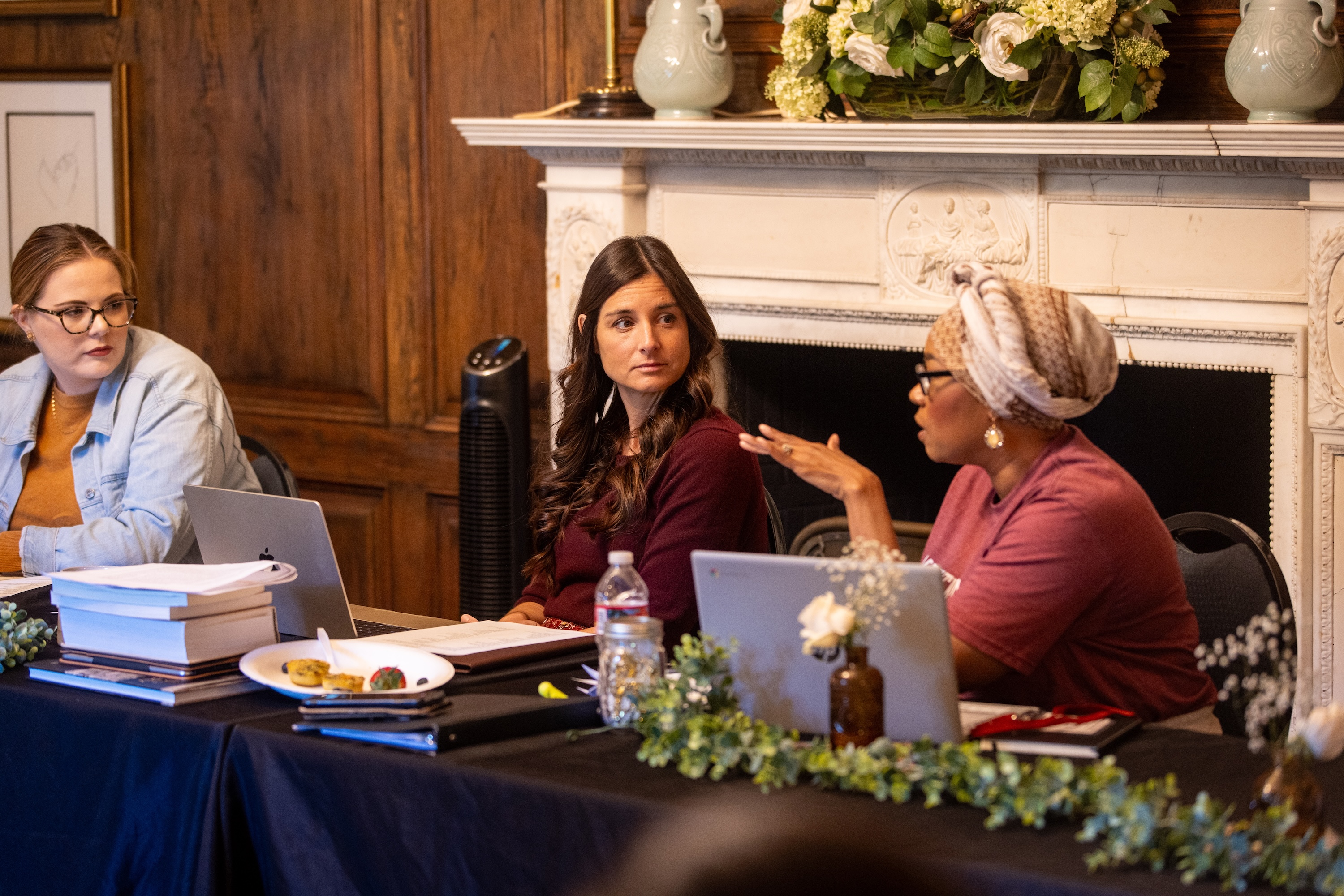
Westmont offers a program to cultivate wisdom in Christian leaders, offering a post-baccalaureate Certificate in Theological Leadership. This program is designed for ministry professionals, laypeople eager to grow spiritually, and recent college graduates considering seminary.

Opportunities Abroad
- Jerusalem University College Israel Mayterm
- The Footsteps of Paul: Turkey, Greece, and Rome Mayterm
- Summer Program in India: Kolkata, Varanasi, Chennai
Westmont in the Mediterranean
Major Requirements and Sample Schedule
RS 119, Early and Medieval Christianity
RS 120, Reformation and Modern Christianity
RS 142, World Religions
RS 159, Missiology
RS 180, Senior Seminar
One Old Testament course: RS 101, 102, 106, 108, 124, 154
One New Testament course: RS 110, 111, 113, 114, 116
Plus 20 units of Elective Courses
Religious Studies Minor (20 units)
One of: RS 119, 120, or 151
16 additional elective units
Biblical Languages Minor (20 units)
GRK 001, 002, 101, 102, 151
HB 001,002
Fall
- RS 010, Introduction to New Testament
- Elective: GRK 001 (Elementary Greek) or HB 001 (Elementary Hebrew)
Spring
- RS 001, Introduction to Old Testament
- Elective: GRK 002 or HB 002
Fall
- RS 020, Christian Doctrine
- Core course: RS 110, Jesus and the Gospels
Spring
- Core course: RS 142, World Religions
- Core course: RS 101, Pentateuch
Fall
- Core course: RS 119, Early and Medieval Christianity
- Core course: RS 159, Missiology
- Elective: RS 116, The Apocalypse
Spring
- Core course: RS 120, Reformation and Modern Christianity
- Elective: RS 100, Foundations of Spiritual Formation
Fall
- Elective: RS 190, Religious Studies Internship
Spring
- Core course: RS 180, Senior Seminar
Key Skills Our Graduates Develop
Hermeneutical Competence
Students will read texts closely and thoughtfully, use scholarly sources responsibly, and apply diverse interpretive methods while recognizing their strengths and limits.
Theological Judgment
Graduates will understand core Christian beliefs and their historical development, interpret biblical and theological texts faithfully, evaluate diverse theological perspectives fairly, engage intellectual and practical issues thoughtfully, and grow in the practices of Christian faith and life.
Ecclesial Engagement
Graduates will integrate personal faith, scholarship, and the life of the Church, embracing rigorous inquiry, faithful service, and worship, while cultivating lifelong theological reflection, compassion, and public engagement.